Pages

Showing posts with label pldt. Show all posts

Thursday, March 14, 2013

Stock News 2013: PLDT to expand fiber optic network

The PLDT Logo
The PLDT Logo (Photo credit: Wikipedia)

Philippine Long Distance Telephone Co. is rolling out over 5,000 kilometers of new fiber optic cable this year to support both wireless and fixed-line services across the country.

In a statement, PLDT said it would spend P2.5 billion to push its fiber optic network to over 60,000 kilometers this year.

The fiber expansion program for 2013 will cover the domestic fiber optic network (DFON) used for long-haul applications, fiber-to-the home (FTTH), fiber-in the-loop (FITL) and other inter-office fibering projects.

The FTTH project, for example, will make PLDT’s high-speed internet services available to about two million homes in different parts of the country, incuding Metro Manila, the regions of Central Luzon, Southern Tagalog, and the provinces of Panay, Negros Occidental, Cebu, and Davao.

“With this expansion program, we are bolstering our already formidable fiber advantage,” PLDT president and CEO Napoleon Nazareno said.

“Fiber is key to having the capacity to deliver next-generation, large-bandwidth data services,” he added.

Additional fiber links include submarine cables that will boost the data connectivity of the islands of Palawan, Bohol and Panay where the demand for resilient data services is rising due to the booming tourism and business process outsourcing industries in these areas.

Last month, PLDT announced the completion of the Hong Kong FOC extension project as part of the 7,800-km undersea Asia Submarine-cable Express system that links the Philippines to Japan, Malaysia, Singapore, and Hong Kong through PLDT’s new landing station in Daet, Camarines Norte.

http://business.inquirer.net/111709/pldt-to-expand-fiber-optic-network

Enhanced by Zemanta

Saturday, January 19, 2013

Stock News 2013: TV5 allots P6B for capex

GMA Logo in their 60th Anniversary
GMA Logo in their 60th Anniversary (Photo credit: Wikipedia)

ABC Development Corp., owner and operator of TV5, is infusing P6 billion for its capital expenditures this year to boost its efforts to cut losses since dominant carrier Philippine Long Distance Telephone Co. (PLDT) acquired the network in 2009.

PLDT chairman Manuel V. Pangilinan told reporters on the sidelines of TV5’s “Blast Off for 2013” that the country’s third largest network’s budget for capital expenditures this year would be at par with the amount spent by the company last year.

This year’s budget would be allocated to complete the network’s state-of-the-art media center in Mandaluyong City with the news part scheduled to be finished in the first quarter.

“The capex would be around P6 billion, approximately the same as last year. We are still building our entertainment studios in Mandaluyong and the news part will be finished within first quarter this year,” Pangilinan said.

He added that a portion of the amount would also be used to introduce new shows as the network goes full throttle towards being one of the country’s leading multimedia this year.

TV5 welcomed the new year with its biggest show of force as it launched its biggest offerings for the first quarter of the year.

The PLDT chief pointed out that the company’s reprogramming would redound to improved bottomline as TV5’s losses ballooned to about P2.8 billion in the first half of last year.

“We should be better this year with better programming, better talents, and revenues I think,” Pangilinan said.

He said the company is now in the process of trimming its operating and production costs.

“It is a learning process for us in terms the ability to control cost of mounting a production whether it is a teledrama or a comedy. We are learning how to control the cost of production,” he explained.

According to him, TV5 would be able to sustain its strong finish last year after overtaking GMA Network Inc. (GMA7) in the last quarter in six viewer rich cities in Metro Manila including Iloilo, Cebu, Davao, Cagayan de Oro, Bacolod, and General Santos City that has a total four million viewers based on Nielsen TV Audience Measurement.

http://philstar.com/business/2013/01/17/897750/tv5-allots-p6b-capex-will-launch-new-shows

Enhanced by Zemanta

Friday, December 21, 2012

Stock News 2012: PLDT selling SPi Global

The PLDT Logo
The PLDT Logo (Photo credit: Wikipedia)

The largest Filipino-owned business process outsourcing (BPO) firm, SPi Global Holdings Inc., is set to be acquired by a foreign group as the former’s parent, Philippine Long Distance Telephone Co., looks to pare down its debts.

PLDT chairman Manuel V. Pangilinan said the company had found a preferred buyer to acquire 80 percent of SPi Global, which has over 18,000 employees in the Philippines and four other countries.

“It’s an excellent business and (SPi Global CEO Maulik Parekh) has done an excellent job increasing its value,” Pangilinan said in an interview on Tuesday.

“The decision to sell came when we were still negotiating to buy GMA 7. That deal never happened, but we decided to push through with the sale of SPI,” he told reporters.

Pangilinan said the buyer would acquire an 80-percent stake in SPi, while PLDT would keep the remaining 20 percent.

Pangilinan said the PLDT group was also willing to contribute to SPi’s future expansion.

The PLDT group also recently sold its 27-percent stake in PhilWeb Corp., a gaming firm controlled by the group of Roberto V. Ongpin, for $101 million.

“We already identified a preferred buyer and we are in the final stages of documentation,” Pangilinan said, adding that the buyer was a foreign private equity fund with existing investments in the BPO business. He, however, declined to reveal other details.

He said that while he believed SPi was a financially strong company, its impact on the PLDT group’s overall bottom line or share price was never significantly felt.

The PLDT group expects to post a P37-billion net income this year. PLDT is also the most valuable firm listed on the Philippine Stock Exchange.

Proceeds from the sale of SPi would be used to pay debts.

http://business.inquirer.net/98779/pldt-selling-spi-global

Enhanced by Zemanta

Tuesday, November 6, 2012

Stock News 2012: Huge downpayment, regulatory approvals scuttle GMA-PLDT deal


GMA Network reportedly demanded billions of pesos paid once a memorandum of understanding (MOU) is signed with the group of Manuel V. Pangilinan, whether or not the latter’s bid to acquire the private stake in the broadcasting company pushes through.

This, as well as other non-monetary demands, led Pangilinan’s group to no longer pursue its quest to purchase the over 70 percent stake held by the Gozon, Jimenez, and Duavit families in GMA, The STAR learned.

Sources revealed that the billions of pesos in fees, which is on top of the reportedly over P50 billion purchase price, was to paid after the MOA is signed and before the closure of the deal. Other requirements prior to closure include securing all the necessary government and regulatory licenses and approvals, all to be secured by the PLDT Group.

Without GMA help, securing the necessary licenses and approvals will not be easy, a source said.

It was not immediately known why the owners of GMA wanted the inclusion of the provision on the “fee” in the discussions when during the Pangilinan’s group’s first attempt to takeover GMA, there was no such demand.

Sources privy to the recently failed negotiations revealed that Pangilinan’s group felt that the owners of GMA were just not interested to sell. “This was not something an interested seller would ask for,” a highly placed source said.

When the two parties jointly announced early last month that the discussions are no longer pushing through, they said that it was not about the purchase price.

The acquisition of GMA by PLDT Beneficial Trust Fund unit Mediaquest was supposed to be part of Pangilinan’s aim for the Philippine Long Distance Telephone Co. (PLDT) to transform into a multi-media company. The group owns minority stakes in The Philippine STAR, Philippine Daily Inquirer and Business World, and controlling interests in TV5 and Cignal, a direct-to-home (DTH) satellite company.

The acquisition of GMA, STAR sources revealed, augurs well with plans of Hong Kong-based First Pacific Co., which controls PLDT, to have a regional presence in the broadcasting field.

Pangilinan earlier said he is in talks with Anthoni Salim, chairman and controlling shareholder of First Pacific, to acquire Salim’s Indonesia-based TV station.

It was also learned that First Pacific is also eyeing a TV network in Vietnam.

In 2001, PLDT engaged in talks with the owners of GMA, but negotiations bogged down over issues encountered by the prospective buyer.

“2001, if I recall correctly was P14 billion (amount being offered for GMA). It’s just that Home Cable came ahead of GMA by a few months. In 2001 and 2002, PLDT was not in good shape. If GMA came in first, I think we would have chosen GMA. But that’s fate,” Pangilinan earlier said.


Enhanced by Zemanta

Wednesday, July 18, 2012

Stock News 2012: Smart completes cellular network under PLDT's P67-billion program

Mobile phone giant Smart Communications Inc. has completed the installation and optimization of new base station equipment for its entire cellular network all over the country as part of the P67-billion modernization program of its parent firm PLDT.

Originally scheduled for completion in 2013, Smart president and chief executive officer Napoleon Nazareno said in a statement that the overhaul of Smart’s cellular network is part of the P67-billion network modernization program of the PLDT Group.

The program, according to Smart, has been fast-tracked in anticipation of increased demand for mobile services, particularly wireless broadband.

“The modernization program is not just an upgrade of our physical network equipment. We are investing heavily in our support systems and personnel re-training. That is why we refer to the program as a technology refresh,” Nazareno stressed.                

Included in the modernization program are the installation of Multi Standard Radios which allow for push-button activation of the latest services and energy-efficient base stations which consume less electricity and take up less space.

Starting in late 2011, Smart replaced the radio equipment in 9,500 base stations with next-generation facilities that have increased its network’s capacity to handle voice, text messaging, and mobile broadband services.

Smart has been deploying Long Term Evolution (LTE) on a test basis since last year and has been gearing up to offer it as a commercial service.

LTE which is widely touted as the next generation of high-speed wireless broadband technologies capable of providing data speeds of up to 100 mbps and beyond.

“Every single base station of Smart is now easily upgradeable to fourth-generation technologies like HSPA+ and LTE,” Nazareno added.

The modernization program would enable Smart to offer high-speed mobile broadband in many more parts of the country.

For his part, Smart chief wireless adviser Orlando Vea said the company would move on to the next phase of its modernization program that includes introducing new billing and customer managements systems in the next few months.

“Our goal is to make simple and easy for our customers to use our unmatched network infrastructure through innovative and flexible service packages and superior customer service,” Vea said.

Smart’s infrastructure build up is also being complemented by network investments of PLDT that has completed the installation of over 50,000 kilometers of fiber optic cabling, covering the entire country and the laying of over 50,000 kilometers of fiber optic cabling in looped configuration for unparalleled resiliency.

PLDT recently started operating its third international undersea cable landing station in Daet, Camarines Norte.

PLDT has two other landing stations – one in Nasugbu, Batangas and the other in San Fernando, La Union – giving its international communications and internet services unmatched resiliency.

Rolando PeƱa, head of PLDT-Smart Network said both companies are now ready for the next chapter of telecommunications.

“With our enhanced networks, we can offer world class services to Filipinos such as Fiber to the Home and LTE,” Pena added.

PLDT has started to deploy on a commercial basis FTTH services in selected areas of Metro Manila. Fiber offers data connection speeds of up to 100Mbps.

Smart is the Philippines’ leading wireless services provider with 50.6 million subscribers on its GSM network as of end-March.


Enhanced by Zemanta

Monday, June 18, 2012

Stock News 2012: Telecom industry to remain competitive

The PLDT LogoThe PLDT Logo (Photo credit: Wikipedia)
The telecommunications industry is expected to remain very competitive, more so that competition will come not only from existing and new telcos but also from services offered by  “over the top” players of the Internet world, Philippine Long Distance Telephone Co. (PLDT) group chairman Manuel V. Pangilinan said.

During the company’s stockholders’ meeting, he noted that players like Facebook, Google and Apple directly compete with PLDT’s traditional services.

“The radical changes that digital technologies are bringing to the telecoms industry will become more pervasive and profound in the next few years,” Pangilinan said.

He emphasized that these forces are changing the face of communications — from keypads and keyboards to touch screens of various sizes. “Increasingly, people are communicating with each other through smartphones, tablets, laptops and smart TVs. From voice and text, connections whether wired or wireless are becoming broadband and multimedia. In five years, the market will, in growing numbers, be populated by ‘digital natives’ — young people who have grown up with mobile phones, Facebook, Twitter and YouTube,” he added.

Pangilinan revealed that the PLDT of the emerging digital future will be one of many touchscreens, and will offer and support a wide range of services beyond basic communications.

“We will help people enjoy entertainment, use financial services, manage their energy needs at home and office, take care of their health,” he said.

Pangilinan also revealed that since having being acquired by the PLDT group, Sun Cellular has been improving its coverage, starting with Mindanao where it has strengthened its signal in Lanao del Norte and Sur, Basilan, Camiguin, Tawi-tawi, Sulu, Bukidnon, Compostela Valley, and Davao del Sur. This was followed by Luzon in areas like Benguet, Ifugao, Kalinga Apayao and Mountain Province, Isabela, Nueva Ecija and Vizcaya, Aurora, and Quirino, and in the Visayan islands of Panay and Bohol.

In maximizing the synergies among PLDT, Smart, Digitel and Sun, Pangilinan noted that they have rationalized the group’s network rollout by minimizing duplication which has resulted in reducing capital expenditure by P8 billion

He revealed that by the end of this month, they will have completed the installation in every cellsite of Smart all over the country a new generation of base station equipment. This will allow the group to quickly upgrade to the latest mobile phone technologies such as HSPA+ and LTE, as and when their plans and market demand requires.

Within this year, he said that they will have upgraded their transport network with over 54,000 km of fiber optic cable assets that will allow the group to carry up to 10 times more data to handle the rapidly growing traffic in voice, SMS and data traffic. In addition, PLDT will be installing its third and fourth cable landing station to enhance international cable links. The company will also finish the upgrade of its core networks and backroom facilities for both fixed and mobile by yearend

All this, he stressed, will require an investment of about P38 billion this year, bringing  the total bill for PLDT’s modernization program to about P67 billion.

http://www.philstar.com/Article.aspx?articleId=818220&publicationSubCategoryId=66

Enhanced by Zemanta

Tuesday, December 14, 2010

Stock News 2010: PLDT reinvents its landline bundle offering

The PLDT LogoImage via Wikipedia
MANILA, Philippines – The Philippine Long Distance Telephone Co. (PLDT) transforms the face, feel and future of the wireline business via a new offering that bundles a landline with a touch’ screen tablet and a high speed myDSL under a single service plan.

The PLDT TelPad unit includes a special handset that also serves as a charging dock for a 7-inch screen tablet computer. Subscribers can use the handset or the portable tablet computer to make and receive phone calls and access over a hundred thousand online applications on top of the unlimited broadband access of the bundled service.

“The PLDT TelPad was conceptualized and developed here in the Philippines using world-class technology,” PLDT President and CEO Napoleon L. Nazareno pointed out. “And we are starting to bring it to the market now to reshape the future of the landline.”

http://www.mb.com.ph/node/292687/pldt-reinvent


Enhanced by Zemanta

Tuesday, February 23, 2010

Stock News 2010: Meralco profits more than double due to PBR scheme

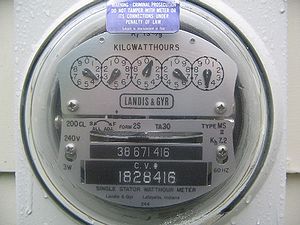
Household electric meter, USAImage via WikipediaPROFITS OF Manila Electric Co. (Meralco), the country’s largest power utility, more than doubled last year following an increase in distribution rates.
In a report to the stock exchange, Meralco said consolidated profits went up by 114% to P6 billion or P5.42 per share, from the prior year’s P2.8 billion.
Meralco said this was “attributable mainly to a slightly higher volume of energy sold and to an adjustment in distribution rates” implemented in May last year. The P0.257 per kilowatt-hour (kWh) hike in distribution charges came a month after the utility was allowed by the Energy Regulatory Commission (ERC) to adopt the performance-based regulation (PBR) scheme, retiring the eight-decade-old return-on-rate-base scheme.
The shift to the more profitable PBR coincided with the entry of new shareholders -- Philippine Long Distance Telephone (PLDT) Co. and Metro Pacific Investments Corp. as well as San Miguel Corp.
Under PBR, the electric utility may increase rates by meeting pre-set performance incentive schemes which is supposed to involve rewards and penalties that will force utilities to become more efficient. The previous cost-plus scheme pegged rates on historical costs plus a reasonable rate of return.
The company’s consolidated core net income, which excludes one-time exceptional charges, grew by 169% to P7 billion from P2.6 billion in 2008. Meralco has a policy of distributing half of core profits as dividends.
Consolidated revenues, which is 97% accounted for by electricity sales, dipped 3.6% due to an average decrease of P0.69/kWh in generation and transmission charges for 2009. This was, however, partially offset by an increase in power consumption and the higher distribution charge.
The May 2009 rate hike also pushed the company’s free cash flow up to P18.8 billion from just P500 million in 2008.
Meralco managed to pare down debts by P19.6 billion last year and refunded P1.8 billion to customers. The utility ended 2009 with a gross debt balance of P20.7 billion.
Manuel M. Lopez, company chairman, said 2009 saw “outstanding results” in profits, cash flows, debt profile and operating efficiency.
Meralco, together with 65%-owned subsidiary Clark Electric Distribution Corp., sold 27,516 gigawatt-hours last year, a 1.7% growth.
The system loss rate stood at 8.61%, below the cap of 9.5% of total output set by the ERC. This is a measure of how much power is lost in the distribution system from pilferage as well as technical limitations.
Analyst Fernando Y. Roxas of Eagle Equities, Inc. said it may be difficult for Meralco to top the 2009 performance this year.
“It’s a little better than expected, although it’s actually too high.
Utilities are not expected to grow this fast, except due to one-off gains. It might be hard for them to repeat the same level of growth this year,” Mr. Roxas said in a phone interview.
Mr. Roxas also said the recent Commission on Audit report on Meralco, which found about P7 billion in excess revenues for 2004 and 2007, may affect investor sentiment on the company.
Mr. Lopez, however, said in Meralco’s disclosure that the utility would not “hesitate to challenge any judgment and speculations on overcharging, which may raise undue public expectation of a refund.”
Analyst Astro C. del Castillo, managing director of First Grade Holdings, Inc., said Meralco’s 2009 performance reflected the company’s efficiency.
“It’s basically the performance of the company catching up with the new management. Despite the boardroom battles we’ve seen last year, the company was nevertheless expected to be efficient,” Mr. del Castillo said in a phone interview.
National Association of Electricity Consumers for Reform President Pete Ilagan said the profit increase of Meralco last year was “unreasonable” and came “at the expense of consumers.”
“They are now becoming very profit-oriented which is not in keeping with the principles of a public utility. They should immediately file for a rate reduction with the ERC,” Mr. Ilagan said in a phone interview.
From a P350-million net loss in 2005, Meralco posted P3.5 billion in earnings for 2006. This grew to P3.8 billion in 2007 and declined to P2.8 billion the year after due to regulators’ decision to disallow the recovery of generation and transmission charges.
Meralco shares went up by 1.84% to P163.00 apiece yesterday. The stock hit a record high of P302.50 last year amid the scramble for control between the PLDT group and San Miguel.
The Lopezes and PLDT have an alliance to fend off any hostile takeover.
Mediaquest Holdings, Inc., a subsidiary of the Beneficial Trust Fund of PLDT, has a minority stake in BusinessWorld.
Jose Bimbo F. Santos
February 23, 2010
http://www.bworld.com.ph/weekender/content.php?id=6780
Enhanced by Zemanta