Pages

Showing posts with label energy. Show all posts

Wednesday, February 13, 2013

Stock News 2013: Victorias Milling plans diversification

English: Taken by Neutronic
English: Taken by Neutronic (Photo credit: Wikipedia)

Sugar firm Victorias Milling Corp. plans to diversify into allied businesses to strengthen operations ahead of a low-tariff regime under the Asean Free Trade Area (Afta) by 2015.

Within the next two years, VMC may raise fresh funds to go into new ventures, first of which will be power co-generation, then bio-ethanol production and allied infrastructure like co-investing in a railroad system to transport sugarcane.

“The challenge is Afta, but we’re transforming VMC,” company chairman Wilson Young said in an interview at the sidelines of the company’s stockholders’ meeting last week.

VMC has obtained consent from its shareholders to amend its secondary purpose under the charter to allow the co-generation of electricity for its own use for lighting and other purposes. In addition to the leeway under its existing charter to go into manufacturing, agricultural, educational, mercantile, insurance, trading, real estate and fiduciary businesses, more amendments were made to include infrastructure, transportation, telecommunications, mining, water, power generation, recreation, financial or credit and consultancy.

In manufacturing, it was specified in the amendment that this would include but not be limited to ethanol and potable alcohol production, harnessing synergies from its sugar milling operations.

Young explained that the company was not planning to pursue all these activities, but only needed the flexibility. The amendments will be presented for approval by the Securities and Exchange Commission and creditor-banks.

“We definitely need new money,” Young said, when asked how new ventures would be funded. “We will study that; maybe in the next two years we can tap new loans again.”

Power co-generation could be prioritized, he said, because the feed-in-tariff (to encourage renewable energy) was already put in place by the government.

http://business.inquirer.net/107003/victorias-milling-plans-diversification

Enhanced by Zemanta

Wednesday, December 19, 2012

Stock News 2012: Meralco sees 7% sales growth

Meralco Bolts logo
Meralco Bolts logo (Photo credit: Wikipedia)

Manila Electric Co. (Meralco), the country’s biggest power distributor, expects its electricity sales to grow by 7 percent this year, faster than the 1 percent posted a year ago.

For 2013, however, Meralco has set a more conservative sales growth target of 4 to 5 percent, which approximates the average yearly growth of the utility, according to Meralco president Oscar S. Reyes.

Reyes said the expected growth in 2012 was largely boosted by the “healthy pickup of [electricity] demand by industrial consumers,” particularly the semiconductor sector, construction related industries like steel and plastic, and the food and beverage industry.

“There’s a clear indication that industrial growth is healthier now than it was last year,” Reyes explained.

“Commercial demand has also been quite healthy and that’s a result of, I think, the continuous building of new malls and entertainment centers,” he added.

The electricity demand of Meralco’s residential customers, according to Reyes, posted a “decent” growth, due to the healthy inflows of remittances from overseas Filipino workers and increase in private consumer spending.

With the projected growth in sales, Meralco expects its 2012 net income to hit P16 billion.

For 2013, Reyes noted that the 4 to 5 percent growth target was based on the fact that the “fundamentals are there for the continued robust growth of the economy because there’s over P21 billion in OFW remittances, over P13 billion in BPO remittances, and we have private direct investments, on top of portfolio money flows.”

“[Those inflows] drive both private consumption spending and capital investment,” he said.

The elections next year are likewise expected to help perk up electricity demand, he added.

Reyes, however, noted that more than just the growth targets, the main concern right now should be the ability of the country to meet the rising demand for electricity.

http://business.inquirer.net/98449/meralco-sees-7-sales-growth

Enhanced by Zemanta

Sunday, June 26, 2011

Stock News 2011: EDC to start wind power project this year

WADEBRIDGE, ENGLAND - FEBRUARY 22:  Grey skies...Image by Getty Images via @daylife
Energy Development Corp., the country’s biggest producer of geothermal energy, may finally start within the year its planned 86-megawatt wind power project in Burgos, Ilocos Norte, as it anticipates the issuance of the much-awaited feed-in-tariff rates.

“Should the feed-in-tariff rate for wind gets approved, we will move on the Burgos project immediately. All we’re waiting for is the final FIT rates—the project is pretty much good to go,” said EDC president Richard B. Tantoco.

“The Burgos wind farm project is a fully funded business plan, so we’re good [in terms of financing],” Tantoco added.

While he did not disclose investment figures for the planned wind farm, Tantoco said that EDC might need to infuse roughly $2.5 million to $3 million to produce a megawatt of wind power. This means that for an 86-MW portfolio, the Lopez affiliate needs to invest as much as $258 million, or about P11 billion.

Should the wind power project be pursued this year, EDC has already earmarked P4.4 billion to fund the project development costs of the Burgos farm. The amount formed 39 percent of the P12 billion in capital expenditure budget of EDC for 2011.

http://business.inquirer.net/5293/edc-to-start-wind-power-project-this-year


Enhanced by Zemanta

Saturday, June 11, 2011

Stock News 2011: ERC resolution paves way for ‘open access’ regime in power

High tension line in Montreal, Quebec, CanadaImage via Wikipedia
The Energy Regulatory Commission (ERC) en banc has finally reached a decision which provides for the official declaration of open access or the policy regime in the deregulated electric power industry that will give choice to electricity consumers.

A resolution, according to industry stakeholders, was signed on June 6 and such provides for a six-month transition or until December 26, 2011 for the official kick-off of open access.

Even with the formal declaration and the prescription for a transition phase though, the assessment of the industry players is that the ‘power of choice route for consumers’ may not actually gain traction until the next two years.

“The declaration of open access is just the initial step. When that will bear fruit will be a longer process, we still see a delay of two years,” industry sources noted; adding that one next major step would be crafting the rules on settlements for open access-related transactions.

Basically, the policy will give end-users within the 1.0-megawatt peak demand bracket the leverage to contract for or purchase their electricity needs from preferred suppliers.

That regime in the industry will principally open up to competition the industrial and big-ticket commercial segments of the power utility’s customer base or what has been referred to as the “contestable market”. In the case of the Manila Electric Company (Meralco), this will account for about 27 to 30-percent of its customers.

http://mb.com.ph/node/322123/erc-re


Enhanced by Zemanta

Thursday, March 17, 2011

Stock News 2011: EDC ’10 profit jumps 31%

The cooling tower for the West Ford Flat power...Image via Wikipedia
Energy Development Corp., the country’s biggest producer of geothermal energy, posted a 31-percent increase in its net income to P4.4 billion as of end-2010 from the previous year’s level.

In a statement, EDC said the profit growth could be attributed to the revenue generated by its power generation subsidiary, Green Core Geothermal Inc. (GCGI), which operates the 112.5-MW Tongonan 1 and 192.5-MW Palinpinon geothermal power plants in Leyte and Negros Oriental, respectively.

The Lopez-led firm also reported that its gross revenue from the sale of consolidated steam and electricity rose by 27 percent to P24.2 billion as of end-2010. This was despite a decline in the volume sold during the year, amounting to 7,548.6 gigawatt-hours.

Electricity sales formed the bulk of the revenue at P22.9 billion (6,883 gWh).

Last year, EDC posted P19 billion in gross revenue from the sale of 8,214.2 gWh of steam and electricity.

http://business.inquirer.net/money/topstories/view/20110317-326012/EDC-10-profit-jumps-31


Enhanced by Zemanta

Monday, February 28, 2011

Stock News 2011: Panasonic takes Inverter technology a notch higher

Image representing Panasonic as depicted in Cr...Image via CrunchBase
Panasonic, a world leader in home applian-ces, takes its now-imitated Inverter technology a notch higher with the introduction of its 2011 line of Inverter-equipped air-conditioners.

Touting its flowing curves, intuitive intelligence while blowing cool, clean and healthy air to protect the health of consumers, the Panasonic split-type air-conditioners for 2011 still promises tremendous energy savings and at the same time introduces a couple of other features that are not only helpful in realizing electricity savings but also reduces energy wastage for the sake of the environment.

This year’s new models include EcoNavi, another global ecological standard innovation introduced by Panasonic, furthering its corporate objective of going “green” in its products but definitely without sacrificing a comfortable lifestyle.

After the success of the Inverter technology that promised huge electricity savings, Panasonic, true to its innovative and pioneering commitment to help protect the environment, introduces EcoNavi, an intelligent and ecologically sound function that works by self-detecting where energy is wasted and self-adjusts its cooling power to reduce energy wastage.

So how does the EcoNavi concept of the new Panasonic air-conditioner models work? The technology employs high-precision human sensor and control program technologies in order to optimize the operations of a Panasonic air-conditioner depending on specific room conditions.

Now how is energy saved? The technologies determine where energy is normally wasted, and then self-adjusts the cooling power to help save energy in the most efficient manner but still continue to enjoy uninterrupted cooling, utmost comfort and convenience.

http://www.philstar.com/Article.aspx?articleId=661461&publicationSubCategoryId=71


Enhanced by Zemanta

Wednesday, January 26, 2011

Stock News 2011: AboitizPower reiterates need for flexible RE policies

Illustration: Different types of renewable energy.Image via Wikipedia
AboitizPower Corp. reiterated the need for more flexible policies that would help reduce the barriers that hinder the development of small as well as large-scale renewable energy plants.

“Requiring the same studies, permits and fees from a 1-megawatt (MW) renewable energy plant as a 50-MW will discourage the development of small-scale plants in favor of larger-scale plants, even if the potential capacity in the country for small plants exceed that of the larger plants,” company senior vice president Luis Miguel Aboitiz pointed out during his speech at the Renewable Energy Conference & Expo Manila 2010.

Aboitiz made the call as he shared insights on the policies that face companies in starting out greenfield projects in renewable energy.

AboitizPower, which currently represents one of the largest private renewable energy producers in the country, sponsored the event as part of its commitment to encourage both businesses and individuals to support energy solutions that will leave a lighter impact on Earth’s resources and promote the usage of cleaner and renewable energy.

http://www.mb.com.ph/node/300711/aboitizpower-reiterate


Enhanced by Zemanta

Sunday, January 16, 2011

Stock News 2011: ERC sets higher capex for Meralco this year

MeralcoImage via Wikipedia
Even as it prodded the power utility giant to extract more efficiencies in its operations, the Energy Regulatory Commission (ERC) is likely to allow slightly higher capital expenditure (capex) for Manila Electric Company (Meralco) this year to P8.308 billion from what the latter has applied for at P7.955 billion.

The power distribution firm has divided its capex program into various components, namely: Distribution plant; non-network plant; connection plant; retail plant; materials and supplies and sub-transmission.

In the 91-page draft determination on Meralco’s third regulatory reset under performance-based regulation (PBR) though, it can be gleaned that there is probability that its approved capex program will continuously go down from 2012 to 2015.

Next year, the regulator indicated that the utility firm may be allowed a capital outlay of P9.444 billion; but this will be pared to P8.412 billion in 2013.

http://www.mb.com.ph/node/298804/erc-


Enhanced by Zemanta

Tuesday, September 21, 2010

Stock News 2010: Nido Petroleum finds major oil and gas find in Palawan

A pumpjack in TexasImage via Wikipedia
MANILA, Philippines -  Australian oil and gas exploration company Nido Petroleum Ltd. said it has discovered a potentially big oil and gas reservoir in northwest Palawan.

In a disclosure to the Australian Stock Exchange on Tuesday, Nido said it estimated that structures at its Service Contract 58 or the West Calamian block in Palawan, could contain "over 5 billion barrels of unrisked oil in place."

The Calamian block, straddling 13,440 square kilometers, is adjacent to the Malampaya natural gas field.

"The majority of core data indicates widespread micro-seepage of liquid hydrocarbons across SC 58 based on preliminary gas chromatography results," the company said.

The oil and gas exploration company previously reported it planned to start drilling the Calamian prospect by 2012.


Enhanced by Zemanta

Wednesday, September 15, 2010

Stock News 2010: ERC Dismisses Customer’s Petition Seeking New P39-B Meralco Refund

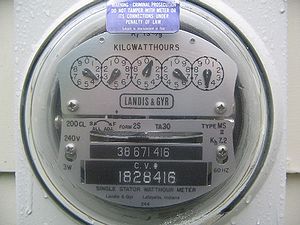
Household electric meter, USAImage via Wikipedia
The Energy Regulatory Commission has denied for lack of merit a consumer’s petition for Manila Electric Company (Meralco) to refund P39 billion in alleged overcharges from 2004 to 2007.

The petition was filed by Genaro Lualhati seeking a refund for residential customers of Meralco and the replacement of the current rates to P0.9077 per kilowatthour.

Lualhati claimed that Meralco overpriced its residential customers because the approved distribution price for 2006 is only P1.083 per kWh compared to the P2.063 per kWh uniform price charged by Meralco.

He said Meralco is making small residential consumers subsidize the power rates of big industrial and commercial users and added that Meralco charged its non-residential customers a rate of only P0.3929 per kWh.

Lualhati alleged that the P0.9077 per kWh should be the highest rate to be charged to any customer class and the current price of P2.0683 per kWh is both "overpriced and discriminatory.”


Enhanced by Zemanta

Tuesday, June 8, 2010

Stocks News 2010: Philippines AP in supply deal with CASURECO IV

The Nesjavellir Geothermal Power Plant in ƞing...Image via WikipediaA provisional approval of the Energy Regulatory Commission (ERC) is being sought for the power supply agreement (PSA) inked by AP Renewables Inc. (APRI) of the Aboitiz group with that of Camarines Sur Electric Cooperative Inc. (CASURECO IV).
The supply pact requires the power generator to deliver power to CASURECO IV until January 25, 2013 within the prescribed contract energy.
It was stipulated in the deal that “the total minimum contract energy to be supplied by APRI to CASURECO IV for each month of the contract period will range from a low of 2,496,702.55 kilowatt hours to 3,314,899.13 kWh.”
Power supply will come from the Tiwi geothermal plant in Albay, which forms part of the 747-megawatt geothermal facility acquisition of APRI that included the Makiling-Banahaw plants in Laguna.
“APRI shall supply the contract energy at the Tiwi geothermal power plant. Line rental charges and transmission fees for delivery and transmission of the contract energy shall be for the account of CASURECO IV,” the PSA stated.
It has been emphasized that the transmission service agreement (TSA) between CASURECO IV and the National Grid Corporation of the Philippines (NGCP) as well as the TSA between APRI and NGCP are currently being negotiated.
The electric cooperative noted that it selected APRI because of its capacity to supply its power requirements. Three parties have made offers, but the two are reportedly aggregators, hence, they do not own or operate power plants which could have been the ultimate assurance that they can meet the electric coop’s demand.
The PSA further provides that should CASURECO IV decides to reduce its contract energy, “it shall pay APRI a buy-out charge equivalent to P2.00 per kWh multiplied by the foregone contract energy for the remainder of the term of the PSA.”
Based on calculations provided to the ERC, the proposed rates to be charged by APRI to the electric cooperative would be P4.4758 per kWh during Mondays to Saturdays and P2.7284 per kWh on Sundays and holidays.
A comparative analysis also emphasized that if compared to the rates that should have been charged by state-run National Power Corporation (NPC) at P4.8309 per kWh, the APRI charge employing the same formula would be lower at P4.3655 per kWh.
MYRNA M. VELASCO
June 8, 2010, 3:48pm
http://www.mb.com.ph/node/261099/
Enhanced by Zemanta

Wednesday, May 5, 2010

Stock News 2010: Meralco says customers to see lower bills

GRAFENRHEINFELD, GERMANY - JULY 09:  Electrici...Image by Getty Images via @daylifeMANILA, Philippines - Troubled by a barrage of complaints over the sudden spike in electricity prices, Manila Electric Co. (Meralco) announced on Wednesday that its customers will heave a sigh of relief with a P1.26-per-kilowatt hour drop in the generation charge this month.
Meralco Utility Economics Head Ivanna dela PeƱa said the decrease was due to lower electricity costs from suppliers -- the Wholesale Electricity Spot Market (WESM) and independent power producers or IPPs.
Dela PeƱa said cost of power from WESM dropped by a hefty P4 to P7.36 per kWh for the supply month of April from P11.36 per kWh the previous month.
IPPs likewise registered a P1.24 per kWh downward adjustment over the same period as suppliers San Lorenzo and Sta. Rita plants reverted to the use of natural gas after using condensate fuel since the second week of February to early March.
Meralco bills last month showed the biggest increase in generation charge, which accounts for up to 60% of total electricity costs. The generation charge shot up by P0.93 to a record P6.7699 per KWh in April from P5.8417 per kWh in March. The April figure was equivalent to a 60% increase since the start of the year.
Meralco explained that the record-high power rates was due to the spike in demand for electricity this summer, when a number of power plants were undergoing maintenance.
Now that some of these plants have returned to normal operations, Meralco said the power supply deficiency in the past months has eased.
"With more plants running close to full capacity, there is more supply to cope with the demand, effectively bringing rates down," Meralco External Communications Manager Joe Zaldarriaga.
Zaldarriaga reiterated that the generation charge is a pass-through charge, and Meralco does not earn from it.
"The generation charge can move from month to month based on many factors beyond our control like fuel prices, working condition of the power plants and WESM prices, among others. Should there be adjustments in the generation charge, it is our duty to reflect these changes in the customers' bills, such as this month's reduction," he said.
"Meralco does not add any mark-up to the cost of electricity purchased from these electricity suppliers whether it is an upward or downward adjustment," he added.
http://www.abs-cbnnews.com/business/05/05/10/meralco-says-customers-see-lower-bills
Enhanced by Zemanta

Tuesday, February 23, 2010

Stock News 2010: Meralco to pay dividends of 50% of core net

MeralcoImage via WikipediaMANILA, Philippines - Manila Electric Co., the Philippines' largest power distributor, said on Tuesday its board of directors has approved a dividend payout equivalent to 50% of its core earnings compared with about 30% previously.
Meralco also said it was optimistic its core net income this year would be higher than 2009, but declined to give a specific forecast.
"Moving forward, it's better to have a consistent dividend policy," said Rafael Andrada, company treasurer. He added there was no formal policy previously though the company's prior cash dividends were around 30%.
Company chairman Manuel Lopez said in a statement the regular dividends could be supplemented by special dividends on a look-back basis.
Meralco reported net income of P6 billion in 2009, up 114% from 2008.
Core net income -- which takes out the effect of foreign exchange gains or losses, mark-to-market adjustments and provisions for possible refunds to customers -- climbed to P7 billion in 2009 from P2.61 billion a year earlier.
Manila Electric is partly owned by holding firm Metro Pacific Investments Corp. and its affiliate Pilipino Telephone Corp., and food-to-power conglomerate San Miguel Corp.
http://www.abs-cbnnews.com/business/02/23/10/meralco-pay-dividends-50-core-net
Enhanced by Zemanta

Stock News 2010: Meralco profits more than double due to PBR scheme

Household electric meter, USAImage via WikipediaPROFITS OF Manila Electric Co. (Meralco), the country’s largest power utility, more than doubled last year following an increase in distribution rates.
In a report to the stock exchange, Meralco said consolidated profits went up by 114% to P6 billion or P5.42 per share, from the prior year’s P2.8 billion.
Meralco said this was “attributable mainly to a slightly higher volume of energy sold and to an adjustment in distribution rates” implemented in May last year. The P0.257 per kilowatt-hour (kWh) hike in distribution charges came a month after the utility was allowed by the Energy Regulatory Commission (ERC) to adopt the performance-based regulation (PBR) scheme, retiring the eight-decade-old return-on-rate-base scheme.
The shift to the more profitable PBR coincided with the entry of new shareholders -- Philippine Long Distance Telephone (PLDT) Co. and Metro Pacific Investments Corp. as well as San Miguel Corp.
Under PBR, the electric utility may increase rates by meeting pre-set performance incentive schemes which is supposed to involve rewards and penalties that will force utilities to become more efficient. The previous cost-plus scheme pegged rates on historical costs plus a reasonable rate of return.
The company’s consolidated core net income, which excludes one-time exceptional charges, grew by 169% to P7 billion from P2.6 billion in 2008. Meralco has a policy of distributing half of core profits as dividends.
Consolidated revenues, which is 97% accounted for by electricity sales, dipped 3.6% due to an average decrease of P0.69/kWh in generation and transmission charges for 2009. This was, however, partially offset by an increase in power consumption and the higher distribution charge.
The May 2009 rate hike also pushed the company’s free cash flow up to P18.8 billion from just P500 million in 2008.
Meralco managed to pare down debts by P19.6 billion last year and refunded P1.8 billion to customers. The utility ended 2009 with a gross debt balance of P20.7 billion.
Manuel M. Lopez, company chairman, said 2009 saw “outstanding results” in profits, cash flows, debt profile and operating efficiency.
Meralco, together with 65%-owned subsidiary Clark Electric Distribution Corp., sold 27,516 gigawatt-hours last year, a 1.7% growth.
The system loss rate stood at 8.61%, below the cap of 9.5% of total output set by the ERC. This is a measure of how much power is lost in the distribution system from pilferage as well as technical limitations.
Analyst Fernando Y. Roxas of Eagle Equities, Inc. said it may be difficult for Meralco to top the 2009 performance this year.
“It’s a little better than expected, although it’s actually too high.
Utilities are not expected to grow this fast, except due to one-off gains. It might be hard for them to repeat the same level of growth this year,” Mr. Roxas said in a phone interview.
Mr. Roxas also said the recent Commission on Audit report on Meralco, which found about P7 billion in excess revenues for 2004 and 2007, may affect investor sentiment on the company.
Mr. Lopez, however, said in Meralco’s disclosure that the utility would not “hesitate to challenge any judgment and speculations on overcharging, which may raise undue public expectation of a refund.”
Analyst Astro C. del Castillo, managing director of First Grade Holdings, Inc., said Meralco’s 2009 performance reflected the company’s efficiency.
“It’s basically the performance of the company catching up with the new management. Despite the boardroom battles we’ve seen last year, the company was nevertheless expected to be efficient,” Mr. del Castillo said in a phone interview.
National Association of Electricity Consumers for Reform President Pete Ilagan said the profit increase of Meralco last year was “unreasonable” and came “at the expense of consumers.”
“They are now becoming very profit-oriented which is not in keeping with the principles of a public utility. They should immediately file for a rate reduction with the ERC,” Mr. Ilagan said in a phone interview.
From a P350-million net loss in 2005, Meralco posted P3.5 billion in earnings for 2006. This grew to P3.8 billion in 2007 and declined to P2.8 billion the year after due to regulators’ decision to disallow the recovery of generation and transmission charges.
Meralco shares went up by 1.84% to P163.00 apiece yesterday. The stock hit a record high of P302.50 last year amid the scramble for control between the PLDT group and San Miguel.
The Lopezes and PLDT have an alliance to fend off any hostile takeover.
Mediaquest Holdings, Inc., a subsidiary of the Beneficial Trust Fund of PLDT, has a minority stake in BusinessWorld.
Jose Bimbo F. Santos
February 23, 2010
http://www.bworld.com.ph/weekender/content.php?id=6780
Enhanced by Zemanta